
Silica Fume in Papua New Guinea: Mining & Hydropower Concrete
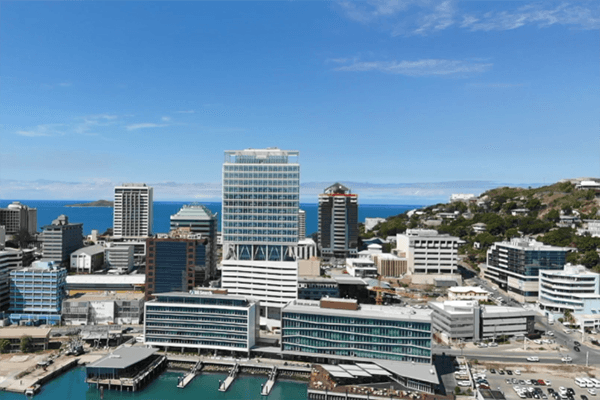
Papua New Guinea (PNG) is a country of extremes — one of the wettest climates on Earth, some of the world’s most rugged and seismically active terrain, and an economy that rests almost entirely on two resource industries: mining and energy. Its copper-gold and nickel mines and its growing hydropower fleet all share one hard requirement: concrete that can hold up under high water pressure, abrasive sediment, acidic mine drainage, and constant tropical moisture. The mineral addition that delivers that performance issilica fume, also known as microsilica.
This article explains why PNG’s mining and hydropower projects create such specific demands for durable concrete, how silica fume meets those demands at the microstructural level, and how HSA supports contractors, engineering firms, and mine operators working across this fast-developing market.
Papua New Guinea’s Mining and Hydropower Landscape
PNG occupies the eastern half of the island of New Guinea, a spine of highland valleys and steep ranges cut by fast-flowing rivers and blanketed by some of the highest rainfall totals recorded anywhere. The country sits on the Pacific Ring of Fire, so seismic activity, landslides, and ground movement are design inputs rather than edge cases. More than 800 languages are spoken across a population of roughly 10 million, much of it scattered across remote highland and island communities — which makes logistics, not just engineering, a defining challenge for every project.
Mining is the backbone of the economy, operating under the oversight of theMineral Resources Authority of Papua New Guinea. World-class operations include the Ok Tedi copper-gold mine in Western Province, the Porgera gold mine in Enga, the Lihir gold mine on its own island in New Ireland, and the Ramu nickel-cobalt operation on the north coast. Many are underground or transitioning underground, where shotcrete ground support is essential; several are in sulfide-bearing geology where acidic, sulfate-rich drainage attacks ordinary concrete; and their processing plants and refineries rely on heat-resistant linings wheresilica fume for refractory casting is widely specified. On the energy side, the country is pursuing a build-out of its abundant hydro resources — the existing Ramu 1 (Yonki) scheme and the plannedRamu 2 project, which includes a roughly 7 km underground headrace tunnel and is being developed as a public-private partnership — alongside a national target of moving toward renewable generation. Every one of these assets places premium demands on concrete strength, impermeability, and chemical resistance.
Why PNG’s Projects Need Silica Fume
Silica fume is an ultra-fine amorphous silicon dioxide (SiO₂) collected from the off-gases of silicon and ferrosilicon smelting. Its particles are about 100 times smaller than cement grains, and that fineness drives two reinforcing mechanisms in concrete. First, a physicalmicro-filling effect packs the tiny particles into the voids between cement grains, densifying the paste. Second, apozzolanic reaction converts the calcium hydroxide released during cement hydration into additional calcium silicate hydrate (C-S-H), the compound that gives concrete its strength and binds the matrix together.
The result is a hardened paste with a much finer, less interconnected pore network — and therefore dramatically lower permeability and higher strength. That combination is exactly what harsh tropical, high-head, and chemically aggressive environments demand, which is why silica fume is a staple of high-performance concrete worldwide. For a primer on the material itself, see our explainer onwhat silica fume is and how it differs from ordinary powders.
How Silica Fume Solves PNG’s Core Concrete Challenges
1. High Strength and Abrasion Resistance in Sediment-Laden Flows
PNG’s rivers carry enormous sediment loads during heavy rain, and hydropower penstocks, spillways, and stilling basins are scoured by water carrying sand and gravel at high velocity. Silica fume lifts compressive strength well beyond ordinary mixes and produces a dense, hard surface that resists abrasion-erosion, extending the life of hydraulic structures that see constant wear. For the strength and durability mechanisms at work, see our guide tosilica fume in concrete for strength, durability, and sustainability.
2. Watertightness for Tunnels, Dams, and Penstocks
The Ramu 2 project’s 7 km underground headrace tunnel and the country’s dam and penstock works must contain high-pressure water without leakage or bleed-through. By refining the capillary pore structure, silica fume dramatically lowers water permeability, producing concrete and shotcrete linings that hold back groundwater and high internal pressures. This watertightness is equally valuable for tailings dams and mine dewatering structures, where seepage is both a cost and an environmental liability.
3. Sulfate and Acid Resistance Against Acidic Mine Drainage
Many PNG mines operate in sulfide ore bodies that generate acid rock drainage — acidic, sulfate-rich water that chemically degrades ordinary Portland-cement paste and corrodes steel. The dense, low-permeability matrix silica fume produces resists sulfate and acid attack far better than conventional paste, protecting foundations, drainage channels, and backfill works in aggressive ground conditions.
4. Shotcrete Ground Support for Underground Mining and Tunneling
Underground mines and the tunnel drives of hydropower projects depend on sprayed concrete applied quickly to freshly excavated rock. Silica fume improves the cohesion of the fresh mix — cutting rebound waste and allowing thicker single-pass layers on wet overhead surfaces — while accelerating early strength so crews can re-enter headings sooner. In PNG’s wet, faulted ground, this combination of adhesion and speed is what keeps development drives safe and productive.
5. Reduced Permeability and Longer Life in Hot, Wet, Seismic Conditions
Tropical heat, constant moisture, and seismic movement all shorten the service life of ordinary concrete through cracking, carbonation, and rebar corrosion. Silica fume’s densified, low-permeability paste slows ingress of water and aggressive ions and improves the durability of the concrete matrix, cutting whole-life maintenance in an environment where repair access is difficult and expensive — a durability-first approach reflected in guidance published by theAmerican Concrete Institute.
Where PNG Projects Are Applying Silica Fume
| Application | PNG Context | Key Silica Fume Benefit |
|---|---|---|
| Underground mine shotcrete and ground support | Ok Tedi, Porgera, Lihir and other underground operations | Low rebound, high early strength, wet-ground adhesion |
| Hydropower headrace tunnels and penstocks | Ramu 2 7 km headrace tunnel, Ramu 1 (Yonki) works | Watertightness under high head, abrasion resistance |
| Dams, spillways, and stilling basins | Sediment-laden river systems | Abrasion-erosion resistance, high strength |
| Tailings dams, backfill, and grouting | Sulfide-bearing mine sites with acid rock drainage | Sulfate and acid resistance, low permeability |
| Smelter and refinery refractory linings | Nickel-cobalt processing and mineral refining | Refractory-grade silica fume for castables |
| Port and marine structures | Port Moresby and Lae ports, coastal LNG and marine facilities | Chloride resistance, durability in humid marine air |
Best Practices for Specifying Silica Fume in PNG Projects
- Dose against the exposure, not just strength. For hydraulic and acid-exposed concrete, specify the dosage needed to hit the required permeability and chemical-resistance class first (commonly 5–10% of cementitious material by weight), then confirm compressive strength.
- Choose the right grade for the method. Undensified silica fume disperses readily in wet-mix shotcrete and ready-mix, while densified grades suit bulk handling, lower dust, and larger batching plants — see our 92 densified silica fume for high-volume applications.
- Plan for remote logistics. PNG’s sites are often road-poor and weather-bound; order in bulk bags or containers sized for the site’s storage and handling, and coordinate delivery around the wet season.
- Verify conformity against recognized standards. Request certificates of analysis covering SiO₂ content, fineness, and pozzolanic activity index, and align with ASTM C1240 requirements — see our overview of ASTM silica fume requirements.
- Pair with a compatible high-range water reducer. Silica fume’s high surface area raises water demand; a superplasticizer keeps the mix pumpable and sprayable while preserving the low water-cement ratio that durability depends on.
Frequently Asked Questions
Why is silica fume preferred for hydropower and mining concrete in PNG?
Both sectors demand concrete that resists high water pressure, abrasive sediment, and chemically aggressive ground. Silica fume addresses all three at once — it lowers permeability, raises strength and abrasion resistance, and resists sulfate and acid attack — which no single ordinary admixture can match.
Is silica fume suitable for underground shotcrete in wet, faulted ground?
Yes. Silica fume improves the cohesion and plasticity of the fresh mix, cutting rebound and improving adhesion on wet overhead rock while accelerating early strength. It is a standard ingredient in the high-performance shotcrete used for mine ground support and tunnel drives.
How does silica fume resist acid rock drainage from sulfide ores?
Acid rock drainage attacks concrete through sulfate and acid reaction with the cement paste. Silica fume’s pozzolanic reaction consumes free lime and produces a dense, low-permeability matrix that resists chemical ingress, slowing deterioration in aggressive ground and drainage structures.
Does silica fume add significant cost to a remote PNG project?
Material cost per cubic meter rises modestly, but the savings from reduced rebound waste, faster tunnel and heading advance, and a longer-lasting, lower-maintenance structure usually dominate over the asset’s life — especially where repair access is remote, difficult, and expensive.
Can HSA supply silica fume into Papua New Guinea reliably?
Yes. PNG’s supply chains run through the ports of Lae and Port Moresby and the broader Asia-Pacific shipping lanes, and HSA ships densified and undensified grades in bulk bags and containers with full documentation, supporting mine, hydropower, and infrastructure programs across the country.
About HSA
HSA (Henan Superior Abrasives I/E Co., Ltd.) is a specialized manufacturer and global exporter of silica fume (microsilica), silicon carbide, fused alumina, boron carbide, and related high-performance mineral materials. With rigorous quality control and export experience across Asia-Pacific, the Middle East, the Americas, and Europe, HSA supports engineers, contractors, and mine operators working under ASTM C1240 and other international standards. Our silica fume line spans densified and undensified grades for ready-mix, shotcrete, refractory, and high-strength applications, with full documentation — including certificates of analysis and pozzolanic activity data — provided with every shipment.
For mine operators, hydropower contractors, and engineering firms sourcing silica fume for tunneling, shotcrete, dam, or refractory projects in Papua New Guinea and the wider Asia-Pacific, HSA offers both densified and undensified grades suited to the region’s demanding conditions.Contact our technical sales team to discuss mix design support, bulk pricing, and shipment scheduling for your next project.
You might also be interested in…
Contact Us
Get Free Quotation
Founded in 2001, HSA is a leading provider of Silica Fume and Abrasives in China, and also the premium source of high-performance Products for concrete and abrasives industries.