
Edge Grinding Wheels: The Complete Guide to Selecting the Right Abrasive for Precision Results
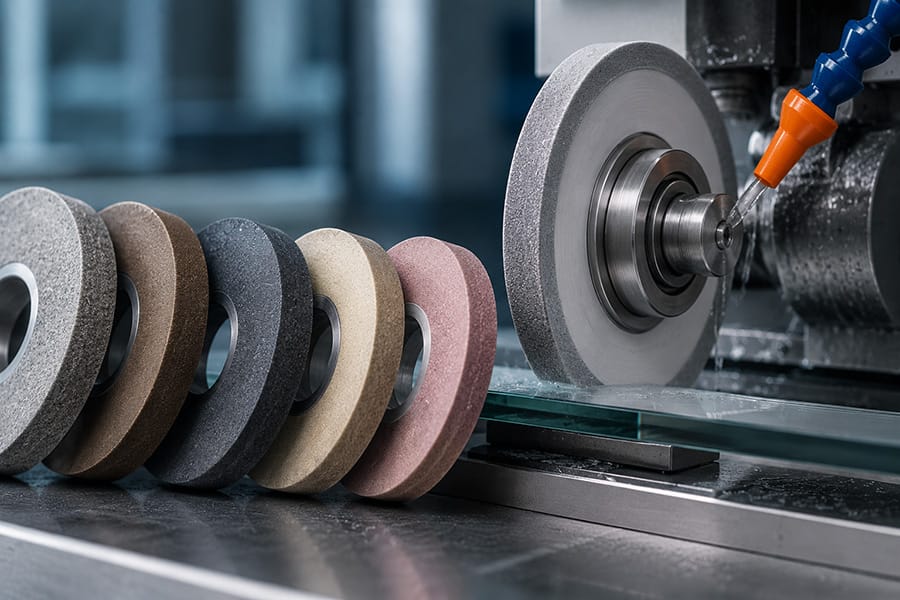
Whether you’re shaping ceramic tiles, finishing metal parts, or cutting stone slabs, the edge grinding wheel you choose can make or break your results. With so many abrasive options on the market, understanding the materials, grit structures, and application requirements is essential for achieving clean, consistent edges with minimal waste.
This guide walks you through everything you need to know — from abrasive grain types to bond systems — so you can confidently select the right edge grinding wheel for your specific job.
What Is an Edge Grinding Wheel?
An edge grinding wheel is a specialized abrasive tool designed to grind, shape, bevel, or finish the edges of hard materials such as glass, stone, ceramic, porcelain, concrete, and metals. Unlike flat grinding wheels that work on broad surfaces, edge grinding wheels are engineered with specific profiles and abrasive compositions to deliver precise edge geometries — straight, pencil-rounded, ogee, or beveled — with tight tolerances.
These wheels are widely used in:
- Architectural glass fabrication
- Natural and engineered stone processing
- Ceramic and porcelain tile manufacturing
- Metal edge deburring and finishing
- Refractory material shaping
Core Abrasive Materials Used in Edge Grinding Wheels
The performance of any edge grinding wheel is largely determined by the abrasive grains embedded in its bond. Here are the most common materials:
1. Aluminum Oxide (Глинозем)
Aluminum oxide is one of the most versatile abrasive materials in the grinding industry. It is available in several variants — white fused alumina, brown fused alumina, and pink alumina — each with slightly different hardness and toughness profiles.
- White fused alumina is prized for its high purity and self-sharpening properties, making it ideal for precision grinding of hardened steel and sensitive workpieces where heat generation must be minimized.
- Brown fused alumina offers excellent toughness for heavy stock removal on carbon steels and nonferrous metals.
For applications requiring consistent edge quality and minimal chipping, aluminum oxide grinding powders remain a top choice among wheel manufacturers worldwide. HSA’s white fused alumina products meet tight particle size distributions essential for producing uniform grinding wheel composites.
2. Silicon Carbide (SiC)
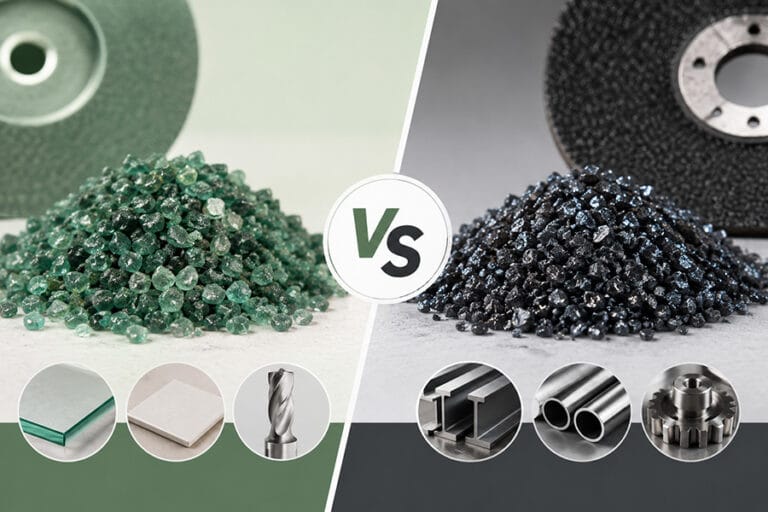
Silicon carbide is harder than aluminum oxide and is the preferred abrasive for grinding hard, brittle, or low-tensile-strength materials such as glass, stone, кераміка, and cast iron. Its sharp, angular grain structure creates aggressive cutting action.
Two types are used in edge grinding:
- Black silicon carbide — standard hardness, suitable for stone, glass, and non-ferrous metals
- Green silicon carbide — higher purity and hardness, used for carbide tools and technical ceramics
When sourcing abrasive powders for wheel production, understanding grit classification is critical. The difference between F-grit and P-grit silicon carbide directly affects how a wheel cuts and finishes — F-grit follows FEPA standards for bonded abrasives, while P-grit is used for coated applications. Choosing the wrong standard leads to inconsistent edge finishes and premature wheel wear.
For coated and bonded abrasive manufacturers, black silicon carbide powder for coated abrasives offers the hardness and friability balance needed for demanding edge grinding operations.
3. Diamond and CBN
For ultra-hard materials — fully sintered ceramics, engineered stone (quartz composite), or tempered glass — electroplated or resin-bonded diamond wheels are the industry standard. Cubic boron nitride (CBN) serves a similar role for ferrous metals where diamond reacts chemically with the workpiece.
Understanding Wheel Bond Systems
The bond material holds abrasive grains together and determines how the wheel releases worn grains to expose fresh cutting edges. The three main bond types for edge grinding are:
| Bond Type | Characteristics | Best For |
|---|---|---|
| Resin Bond | Flexible, good surface finish | Glass, кераміка, light metals |
| Vitrified Bond | Rigid, high porosity, cool cutting | Steel, aluminum oxide wheels |
| Metal Bond | Durable, long life | Diamond wheels on stone/glass |
Selecting the wrong bond for your material leads to glazing (the wheel stops cutting), excessive heat buildup, and chipping on the edge profile.
Key Factors When Selecting an Edge Grinding Wheel
Workpiece Material Hardness
Match abrasive hardness to the workpiece. A general rule: the harder the workpiece, the softer the wheel grade should be (to allow grain release). І навпаки, soft materials benefit from harder wheel grades.
Desired Edge Profile
Different wheel profiles — flat, bullnose, ogee, beveled — require specific wheel geometries. Custom-profiled wheels are available for high-volume production lines.
Grit Size and Sequence
Coarser grits (36–80) remove material rapidly but leave rough edges. Medium grits (100–220) shape and refine. Fine grits (320–600+) produce polished, chip-free edges. Most production lines use a sequence of 3–5 progressively finer wheels.
Wheel Speed and Machine Compatibility
Always verify the wheel’s maximum operating RPM matches your spindle speed. Overspeed is a serious safety hazard and causes premature wheel failure.
Coolant Requirements
Wet grinding with water-soluble coolant extends wheel life significantly, reduces thermal cracking in glass and ceramics, and flushes away debris. Dry grinding is limited to specific resin-bond wheels designed for it.
Common Applications in Industry
Glass edge grinding is one of the highest-volume applications. Architectural glass panels, automotive windshields, and display glass all require consistent edge profiles for safety and aesthetics. Diamond resin-bonded wheels dominate this segment.
Stone and tile edge finishing uses silicon carbide and diamond wheels to create decorative profiles on granite, marble, and quartz composite countertops.
Refractory and ceramic component shaping requires specialized abrasive selections. High-alumina ceramics used in kiln furniture and wear liners demand diamond or green silicon carbide wheels. For context on the global abrasive supply chain, the case study on abrasives supply to Brazil illustrates how raw material quality directly impacts finished wheel performance in international manufacturing.
Sourcing Quality Abrasive Raw Materials
For wheel manufacturers and industrial buyers, the upstream raw material quality — purity, particle size consistency, crystal structure — determines finished product performance. Inconsistent abrasive grain leads to:
- Uneven cutting across the wheel face
- Premature glazing or shedding
- Variable edge finish quality batch to batch
Working with certified, traceable abrasive suppliers who provide lot-specific certificates of analysis is non-negotiable for precision grinding applications.
FAQ
Q1: What is the best abrasive for grinding glass edges?
Diamond resin-bonded wheels are the industry standard for glass. For softer glass or light finishing, black silicon carbide wheels are also effective and more cost-efficient.
Q2: How do I know when an edge grinding wheel needs to be replaced?
Signs include: reduced cutting rate, burning or discoloration on the workpiece, chipping or rough edge finish, and visible glazing (smooth, shiny wheel face). Dress the wheel first — if cutting performance doesn’t recover, replace it.
Q3: What grit sequence should I use for a polished stone edge?
A typical sequence for polished granite: 36 → 60 → 120 → 220 → 400 → 800 → 1500 grit, finishing with a polishing pad. Fewer steps are used for honed or satin finishes.
Q4: Can I use the same wheel for both metal and stone?
No. Abrasive selection, bond type, and wheel speed requirements differ significantly. Using a stone wheel on metal (or vice versa) risks wheel failure and poor results.
Q5: What is the difference between F-grit and P-grit in abrasive powders used for wheel manufacturing?
F-grit follows FEPA bonded abrasive standards (for vitrified and resin-bonded wheels), while P-grit follows FEPA coated abrasive standards. They have different particle size distributions even at the same nominal grit number. Using P-grit in a bonded wheel formulation will produce inconsistent results.
Ready to Source Premium Abrasive Materials?
If you manufacture edge grinding wheels or need reliable abrasive raw materials — silicon carbide, fused alumina, or boron carbide — consistent raw material quality is your competitive advantage.
Contact HSA today for technical specifications, samples, and bulk pricing tailored to your production requirements.
About HSA
HSA (Абразиви Henan Superior) is a China-based manufacturer and global supplier of high-performance abrasive and refractory raw materials, including silicon carbide (black and green), fused alumina (white, brown, and black), карбід бору, and microsilica (silica fume). With over a decade of export experience serving customers across Europe, Північна Америка, the Middle East, and Southeast Asia, HSA provides certified materials with consistent quality, competitive pricing, and reliable logistics. Explore our full product range at hsachn.com.
Вас також може зацікавити…
Зв’яжіться з нами
Отримайте безкоштовну цитату
Заснований у 2001, HSA - провідний постачальник кремнезему та абразивів у Китаї, а також преміум-джерело високоефективних продуктів для бетонних та абразивних галузей.