
5 Principais indicadores de qualidade que você deve verificar antes de comprar metacaulim
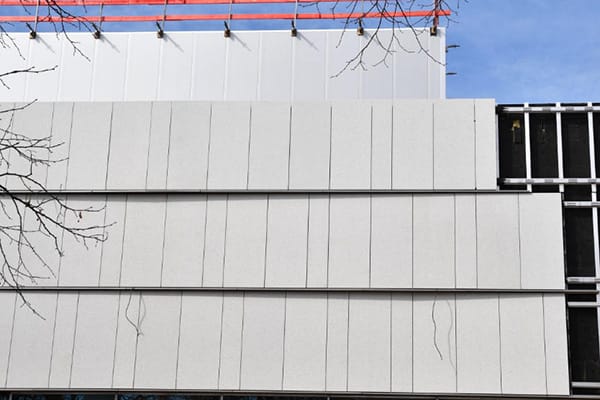
Metakaolin has gained significant traction across concrete production, geopolymer applications, decorative building materials, and specialty coatings. No entanto, not all Metakaolin is created equal — products sold under the same name can vary dramatically in quality and performance.
As a buyer, how can you quickly assess whether a product is worth purchasing? The answer lies in the quality indicators on the Certificate of Analysis (COA). This guide will help you understand the 5 most critical parameters so that you can evaluate any supplier report with confidence.
Quick Reference: 5 Key Indicators at a Glance
| Quality Indicator | Recommended Value | What It Measures | Importance |
| Pozzolanic Activity Index | ≥ 95% (28-day) | Reactivity & strength contribution | ★★★★★ |
| Whiteness | ≥ 80° (decorative grade) | Appearance & application match | ★★★★☆ |
| Fineness (Specific Surface Area) | ≥ 12,000 cm²/g | Particle size & reaction rate | ★★★★☆ |
| Loss on Ignition (LOI) | ≤ 1.0% | Calcination quality & purity | ★★★★☆ |
| SiO₂ + Al₂O₃ Total | ≥ 90% | Chemical activity foundation | ★★★☆☆ |
Below, we break down each indicator in detail — what it means, acceptable ranges, and practical procurement tips.
Indicator 1: Pozzolanic Activity Index
What does this measure?
The Pozzolanic Activity Index (PAI) is the most direct measure of Metakaolin’s reactivity. It reflects the material’s ability to react with calcium hydroxide (a by-product of cement hydration) to form additional strength-contributing compounds — CSH (calcium silicate hydrate) and CAH (calcium aluminate hydrate).
In simple terms: higher activity index = greater contribution to strength and durability when blended with cement.
How is it tested?
Typically measured per ASTM C618, by replacing 10–15% of cement with Metakaolin in mortar specimens, curing for 7 and 28 days, and calculating the compressive strength ratio versus a plain cement control mix.
Recommended benchmarks
- 28-day activity index: ≥ 95% (premium products often exceed 105%)
- High-Reactivity Metakaolin (HRM): 7-day index can already exceed 95%, indicating fast early-strength development
| 💡 Procurement Tip: Always ask the supplier to specify the replacement ratio used in testing — a 10% replacement and a 20% replacement can yield significantly different index values. Make sure you compare like-for-like. |
Indicator 2: Whiteness
What does this measure?
Whiteness directly determines the color of your end product. For white concrete, architectural precast, white cement blends, and high-brightness coatings, whiteness is a non-negotiable parameter. Higher whiteness generally reflects higher kaolin purity and lower iron oxide (Fe₂O₃) content in the raw material.
Whiteness vs. application requirements
- ≥ 85°: Premium decorative concrete, white architectural precast
- 75° – 85°: General structural concrete, geopolymer applications
- < 75°: Industrial applications with no color requirements
Key consideration
If your application has color requirements, always specify a minimum whiteness value in your purchase contract and require a whiteness test report for every batch. Whiteness can vary significantly depending on the kaolin source, and even the same supplier may show batch-to-batch variation.
| 💡 Procurement Tip: Request whiteness data from 3–5 consecutive batches to assess consistency, rather than relying on a single test report. |
Indicator 3: Fineness (Specific Surface Area)
What does this measure?
Fineness determines particle size, which directly affects reaction rate, workability, and the physical packing effect in concrete. Finer particles mean greater surface area for pozzolanic reactions, faster early strength development, and better filling of interparticle voids to improve concrete density.
Common measurement methods
- Blaine specific surface area: Premium Metakaolin ≥ 12,000 cm²/g (vs. ~3,500 cm²/g for ordinary Portland cement)
- Laser particle size distribution (PSD): D50 typically 1–5 μm
- 45 μm sieve residue: ≤ 1% (lower is better)
The trade-off to be aware of
Research shows that finer Metakaolin delivers significantly higher early compressive strength and reduces water absorption. No entanto, ultra-fine products also increase water demand, which must be accounted for in mix design. Discuss this with your technical team before specifying an extremely high fineness grade.
| 💡 Procurement Tip: Ask for a full particle size distribution (PSD) curve rather than a single fineness number. The curve reveals uniformity of particle distribution, which a single data point cannot show. |
Indicator 4: Loss on Ignition (LOI)
What does this measure?
Loss on Ignition (LOI) measures the percentage of mass lost when a sample is heated to ~950°C. For Metakaolin, LOI reflects two critical things: whether the calcination was complete (residual crystalline kaolinite) and whether organic impurities or carbonaceous materials are present.
Why LOI matters
- LOI > 2%: Indicates under-calcination (unreacted kaolinite remains) or organic impurities — both reduce reactivity
- LOI near 0%: May indicate over-calcination, potentially forming low-activity mullite phase, also harmful to performance
- Ideal LOI: 0.5% – 1.0%, confirming complete calcination and material purity
Industry standard reference
ASTM C618 Class N sets a generous maximum LOI of 10%, but high-quality Metakaolin suppliers routinely achieve LOI ≤ 1.0%. A consistently low LOI is a hallmark of a well-controlled calcination process.
| 💡 Procurement Tip: Watch out for batch-to-batch LOI fluctuation. Inconsistent LOI is a red flag for unstable raw material quality or inconsistent kiln temperature control. |
Indicator 5: SiO₂ + Al₂O₃ Active Oxide Content
What does this measure?
The combined content of silicon dioxide (SiO₂) and aluminum oxide (Al₂O₃) represents the chemical foundation of Metakaolin’s pozzolanic activity. These two oxides are the primary reactive components that drive secondary hydration reactions when blended with cement or alkali activators.
Recommended benchmarks
- SiO₂ + Al₂O₃ combined: ≥ 90% (ASTM C618 Class N minimum is 70%; premium products far exceed this)
- Typical premium Metakaolin: SiO₂ ~50–55%, Al₂O₃ ~40–44%, combined total ≥ 94%
- Fe₂O₃ content: ≤ 1.5% for whiteness-sensitive applications
Special consideration for geopolymer applications
For geopolymer concrete and binders, the SiO₂/Al₂O₃ molar ratio (Si/Al ratio) is a critical design parameter — typically optimized around 1.0. Different Si/Al ratios significantly affect geopolymer setting time and compressive strength development. Confirm your target ratio with your R&D or technical team before finalizing supplier specifications.
| 💡 Procurement Tip: Always request an XRF (X-ray fluorescence) full chemical analysis report. This provides accurate figures for all major oxides (SiO₂, Al₂O₃, Fe₂O₃, CaO, TiO₂, etc.) and is the most reliable basis for chemical evaluation. |
Putting It All Together: A 4-Step Evaluation Framework
Once you receive a supplier’s COA, follow this structured approach:
- Step 1 — Check against benchmarks: Use the quick reference table at the top of this guide to verify all 5 indicators meet minimum thresholds.
- Step 2 — Prioritize by application: Identify which indicators matter most for your specific use case. Decorative concrete? Whiteness is paramount. Geopolymer? Focus on activity index and Si/Al ratio.
- Step 3 — Evaluate batch consistency: Request historical data from at least 3 consecutive batches. A single impressive report means little if quality fluctuates batch to batch.
- Step 4 — Run a trial mix: For new suppliers, always conduct a small-scale trial with your actual mix design before committing to large volumes. Lab reports and real-world performance should be verified together.
FAQ
1º trimestre: What is the difference between standard Metakaolin and High-Reactivity Metakaolin (HRM)?
Standard Metakaolin meets the basic ASTM C618 Class N requirements (activity index ≥ 95% at 28 days). HRM is ultra-fine processed with a higher specific surface area (often > 15,000 cm²/g), achieving the same activity threshold as early as 7 days. HRM is preferred for high-performance concrete and geopolymer applications where early strength is critical.
2º trimestre: Can Metakaolin fully replace silica fume or fly ash in my mix design?
Not always on a 1:1 basis. Metakaolin has a different particle morphology and reactivity profile compared to silica fume and fly ash. As a general guideline, Metakaolin can replace fly ash at similar dosages (10–25% by cement weight), but replacing silica fume may require a higher substitution rate to achieve equivalent densification. Always conduct trial mixes before finalizing your design.
3º trimestre: How should Metakaolin be stored to maintain quality?
Metakaolin is hygroscopic and will absorb moisture if left exposed. It must be stored in sealed, dry conditions — ideally in bulk silos or sealed bags away from humidity. Moisture uptake increases LOI values and can reduce flowability, making accurate dosing more difficult. Check moisture content upon delivery if storage conditions are uncertain.
4º trimestre: Why does the activity index vary between suppliers even when the SiO₂ + Al₂O₃ content looks similar?
Chemical composition is necessary but not sufficient for high reactivity. The calcination temperature window (typically 600–800°C) and residence time determine how much of the kaolinite is converted into the disordered, reactive amorphous phase. Over- or under-calcination both reduce activity even if the oxide content appears acceptable. This is why LOI and activity index must be evaluated together, not in isolation.
Q5: Is there a standard certifications I should require from a Metakaolin supplier?
At minimum, request: (1) ASTM C618 Class N compliance report, (2) XRF chemical analysis, (3) Blaine fineness or PSD curve, (4) whiteness certificate if appearance matters, and (5) ISO 9001 quality management certification for the production facility. For food-contact or pharmaceutical applications, additional certifications apply.
Q6: What dosage rate is typically recommended for concrete applications?
Most applications use 10–20% Metakaolin as a cement replacement by weight. Below 10%, the performance benefit is limited; above 25%, water demand increases significantly and workability may suffer. The optimal dosage depends on your target strength, durability requirements, and whether superplasticizers are used in the mix.
Sobre nós
For full COA reports, historical batch data, or technical guidance on selecting the right Metakaolin grade for your application, please contact our technical team. We offer pre-purchase consultation and sample trial services to ensure you make the most informed procurement decision possible.
Você também pode estar interessado em…
Contate-nos
Obtenha orçamento grátis
Fundado em 2001, A HSA é fornecedora líder de sílica ativa e abrasivos na China, e também a fonte premium de produtos de alto desempenho para indústrias de concreto e abrasivos.